Workington

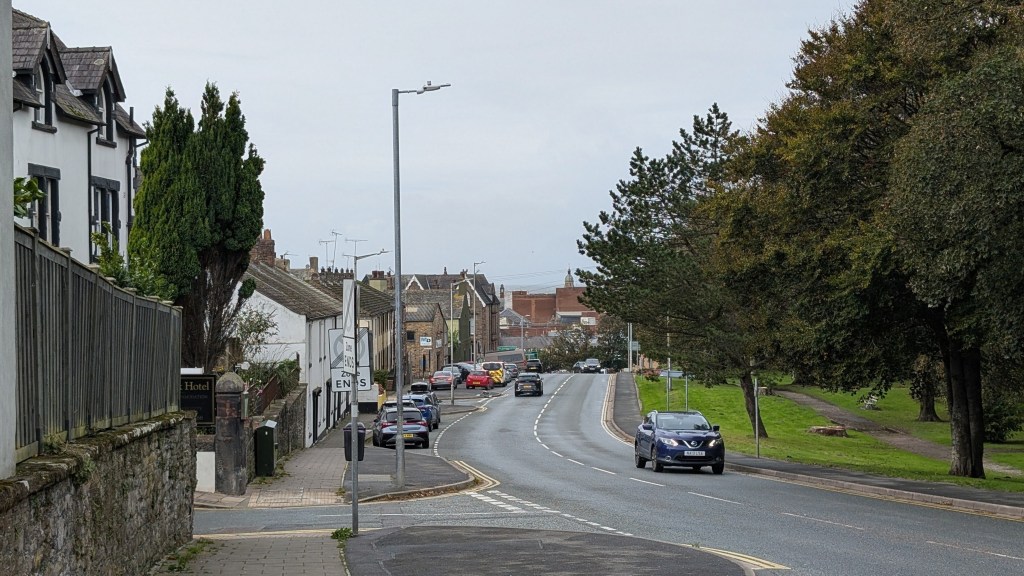
Workington view looking down to the sea

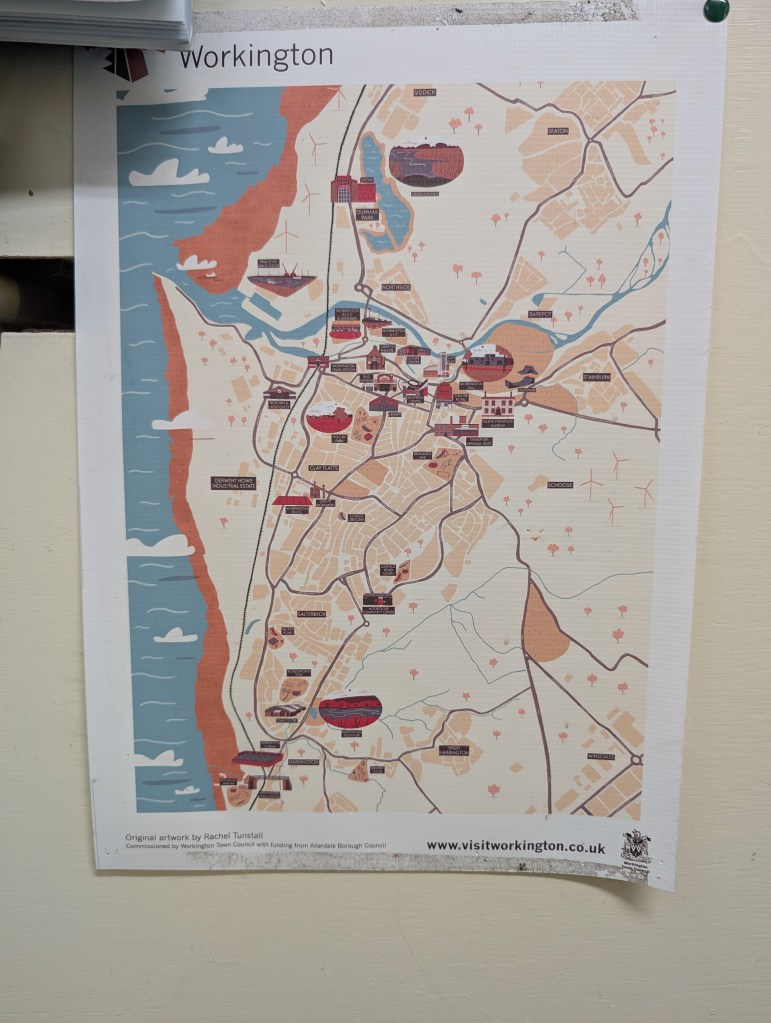
Workington is town of (currently) more then 20,000 residents located on the Irish Sea coast of Cumbria (formerly “Cumberland”), a short train ride from Carlisle and Scotland. It’s on the western edge of the legendary mountains of the “Lakes District” which is now a national park in the northwest corner of England. The western edge of Hadrian’s Wall started not far from Workington which has something of a Roman history as well. The town sits at the mouth of the river Derwent but back from the actual shoreline where a number of railyards, warehouses, and a small port separate the town center from the sea.

Continue reading “Workington”

Henry Rector 1799 Will

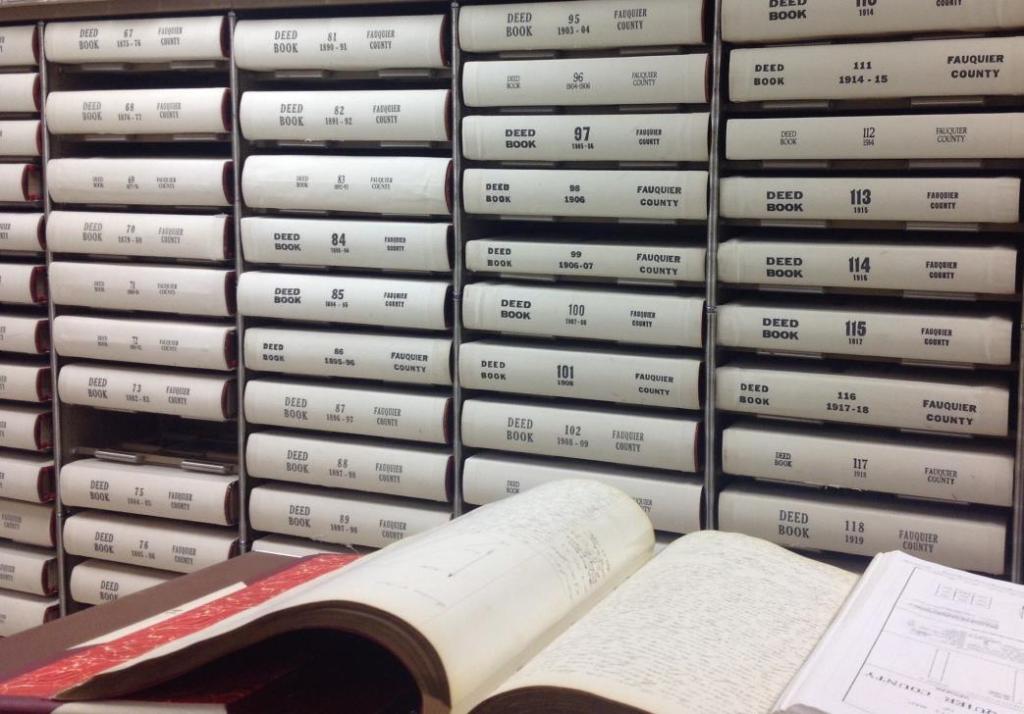
The Records Room at the Fauquier County Circuit Court

One of the fun things about visiting the Fauquier Co., VA Courthouse in Warrenton was to see a room filled with bound copies of property records: wills and deeds.1 One of the services our government provides is the to collect and validate how our property is to be transferred when we cannot do so for ourselves, and who owns what land at any moment now or in the past. Considering that all citizens agree that these records control the ownership of vast amounts of wealth it’s a wonder that these documents are so easily accessed, and the offices that maintain them often operate with less security than a bank or jewelry store in many cases. The most valuable property these offices hold, in my opinion, is stories.

Herein is the story of a son of the second son of JJR, the first born on this continent after his father and mother and older brother left Siegen in Germany to immigrate to colonial Virginia with thirteen other families. Henry lived a long life, dying at 84 but surviving four of his children including his son Spencer who is the next link in our line.

Who knew feather beds were so valuable that they are mentioned right up front, just after land and money? Apparently so, as Henry specified that son Elijah would get SECOND choice of feather beds, while daughter ‘Caty’ is offered FIRST choice:

Continue reading “Henry Rector 1799 Will”

MR Cars

Marc was passionate about cars of all kinds, especially the one he was driving at that moment. He did not stick with one auto brand throughout his life, sampling (sometimes on the wild side) much of what was new and interesting. He almost always purchased new cars, so the leases at the end are unusual. The Saabs and GTI may have been purchased used. Possibly the MG Midget as well. That said, he started with VW, visited the VW plant in Wolfsburg, Germany in 1979, and ended with VW which must mean something. Below is a reasonably thorough list that I’ve come up with that illustrates his life in cars. I look forward to getting corrections and additions (and photos of MR in any of these cars?) from others to help make this more complete.

Continue reading “MR Cars”

Remembering Marcus

Below are memories of Marc Rector that were given to his family ahead of the memorial service that was held on Saturday, April 1st, 2023 at The Cheese School of San Francisco.

Johannes Jacob Richter — later known as John Jacob Rector — left Siegen, Westphalia (now Germany) with his wife and first born child in 1713 to become an indentured worker in the first colonial iron mine in North America. He was a metalworker in Siegen, as were his forefathers, many of whom lived in “Truppbach,” a town across the river from Siegen that translates to “army town.” For generations he and his fore bearers worked to support the local feudal lords fighting for territory and religion in Northern Europe.

Later that century, Mary Tiffin Rector brought her children to the Ohio Territory, one of whom was named “John Rector”. One of Mary’s grandsons, Marcus Clay Rector, joined the Union Army during the Civil War. He likely faced many of his cousins who fought in the Virginia CSA cavalry and militias. His son, Marcus Clay Jr., was the formidable grandfather of my John Marcus Rector that Marc remembered visiting, along with grandma Libbie, in West Jefferson, for large family get togethers: Marcus and Libbie had nine children themselves.

Our patronymic family has a long relationship with the military, through at least seven centuries, including the US Navy which gave John Marcus Rector the opportunity to be the first in his family to graduate from a university. It also gave him the opportunity to leave Ohio and see the world, for which he was always grateful. He always spoke fondly of his time as a communications officer on two destroyers, one in the Pacific and one in the Atlantic. This indirectly lead to my own first European tour, inside my Mom who was pregnant with me when she joined a group of Navy wives following their husbands around Europe in the spring of 1964. Thank you Mom and Dad! I still remember my first taste of live baby eels fried tableside in Spain…true story, ask Carol about that sometime.

–Eric

Marcus, he drew a line around our hearts

and drew us to his home.

He shared his thoughts like hors d’oevres

to feed his passion to be known.

His ghost shall be good at craps.

His cheers scared the cats from his lap.

He sang, when the feeling found him,

and he laughed in every language.

He was the wine and football man

and because of that, still is.

No beauty ever dissappears.

He didn’t die, he lived

entirely on his own terms.

Marcus, our Bacchus,

he took his time, which took his turn;

he was so easy to remember,

like some song you can’t unlearn.

–Brian, after the stylings of cowboy poet Charles J. Quarto, frequent collaborator with Jerry Jeff Walker
Continue reading “Remembering Marcus”

A Letter From Frank

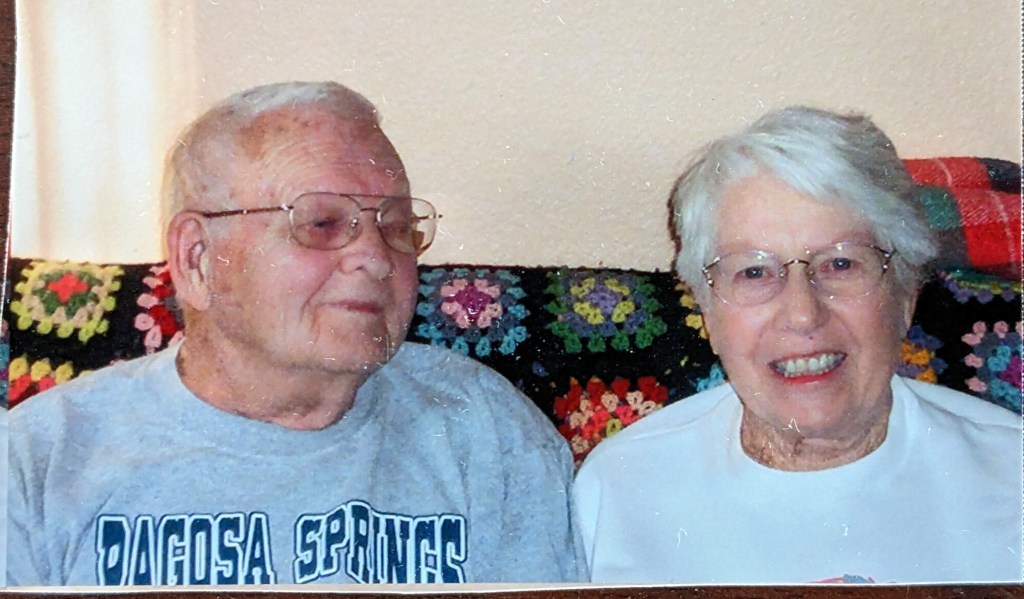
Frank, age 86, and Wilda, age 82, in Tempe, AZ 2006

In or about 1996 Brian gave Marc Rector the basic genealogy of the Rector clan in the US going back all the way to “1666 in Truppich, Germany 2 kilometers east of Siegen.” Brian had stumbled onto the “Rector Records” book and other documents and copied out our line. Given that both his parents had died, this inspired Marc to write to his Rector uncles and aunts for additional information:

Son Brian has been bugging me again about the RECTOR genealogy…Seems he found a book on RECTOR in the New York Public Library a while back and wants to know more…me too.

The following is the Genealogy in a direct line, taken from a much broader genealogy that Frank sent me a few years ago. That one ended with MARCUS CLAY being the son of MARCUS in the mid 19th Century. I have continued it to the best of my knowledge…Many gaps need filled and specifics filled in…PLEASE FILL IN AND RETURN THE COPY TO ME.

There followed is the first outline of our Hilltop lineage that we’ve now added to and compiled in The Begats.

I’ve recently come upon the folder in which Marc stored this information. I have found (so far) responses from Frank Hodgson Rector, as well as Jane Rector Breiding. Jane glossed the MARCUS CLAY outline that Marc had sent her, including the addition of sister Margaret who died tragically (as you will read below) at age 1 1/2. Frank, however, wrote a four page single-spaced letter describing his knowledge of the family background. It was so informative, and colorful, I thought it would be good to add it to this archive:

Continue reading “A Letter From Frank”

Hunting Hans Richter

Dr. Brian Rector (PhD UGA) notes the following with regard to the reporting of Ruth Y. Rector posted on rector.org who says —

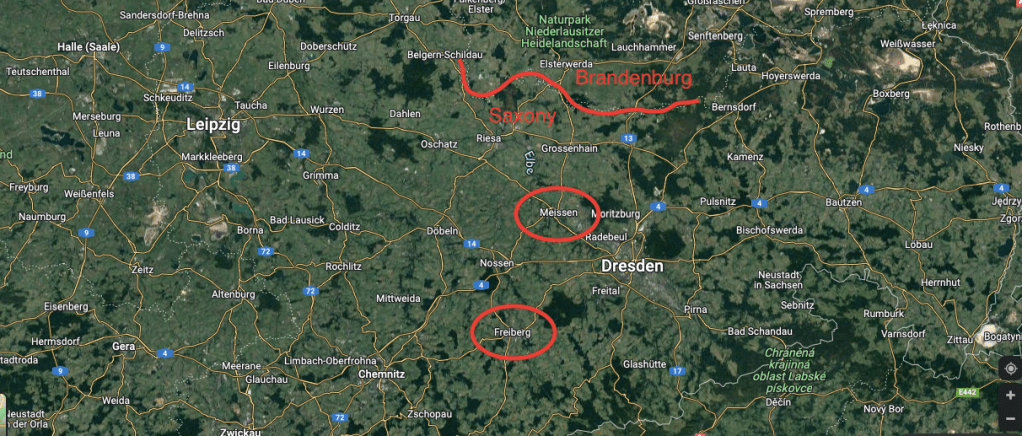
Hans Richter was the earliest ancestor (discovered) of the Virginia Rector family. He was probably born about the year 1550 in Saxony, and the Siegen city records show that he paid the fee for Siegen citizenship in 1585, being ‘from the country near Miessen’, from the city of Freiburg.

In response Dr. Rector notes:

Both of those town names are almost certainly misspelled because (according to the Google Maps) there is no such place as “Miessen” — only Meissen — and near Meissen there is a small city called Freiberg (with two e’s).  Both are in Saxony — not in Lower Saxony, where the “Freiburg near Hamburg and Denmark” is located, as you can see in the attached snippet.  Now why isn’t he described as being from “near Dresden”?  Well, that information was almost certainly provided by Hans himself and I’m guessing he didn’t have any kin in Dresden; only in Freiburg and the country near Meissen and it would have been a good day’s walk from either of those places to Dresden.  Then again, it’s almost 500 km from there to Siegen, so there’s no telling how he got there.  Bottom line though, is that he was almost certainly from that area of Saxony, as reported by Ruth Y. Rector, not from Lower Saxony.

John Marcus Rector

[this obituary has also been printed in the Reno Gazette-Journal, on Friday, November 11th, 2022]

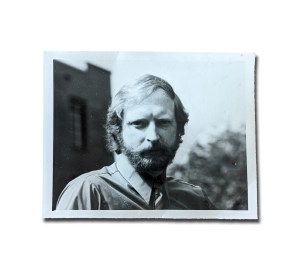
John Marcus Rector died peacefully in his home in Reno on Sunday, November 6th; he was 84. He is survived by his wife Carol of 62 years, brother Tom, sister Amy, sons Eric and Brian and their families. He was generally known as “Marcus” or “Marc” to his friends and colleagues. His nearest brother, Wendell, passed away in 2018.

Born on his grandparents’ farm in Logan, OH, Marc was the first son of Martha and Wendell Rector. He grew up in Columbus, attended West High School, and then Ohio State University on a Navy ROTC scholarship. He served on the USS Tulare and USS Henley as a communications officer. Upon leaving the US Navy he pursued his professional career as an architect in Roanoke, VA, Cambridge, MA, and Jerusalem, Israel.

His seminal work was as project architect for Faneuil Hall Marketplace (FHM) in downtown Boston for Benjamin Thompson and Associates (BTA). This was one of the first, and one of the most influential, of many “festival marketplaces” that revitalized urban centers around the US, and then around the world. In 2009 FHM won the American Institute of Architecture 25 Year Award for “buildings that set a precedent.”

Continue reading “John Marcus Rector”

Maidstone Ordinary

A 1994 listing for what is presented as a tavern built by early Rectors in Rectortown, VA

The article in the Fauquier County Times-Democrat includes most of the history that I know about this, however the statement about the origin of the name differs from my research. I found that the original German settlers joined up in the town of Maidstone, near the mouth of the Thames River in England, after leaving their homes in 1713. When they discovered that their sponsor was broke they were forced to live and work in and around Maidstone (then a papermaking center) for a year to save their own funding for their eventual trip to the Newe Worlde in 1714. The Richters/Rectors must have had fond memories of that year to name their commercial business after the city that took them in.

The fellow who helped us at the Fauquier County Historical Society — Seth –took me up to an office not open to the public specifically to show me this article, which was all that he knew about the Rectors in Rectortown.

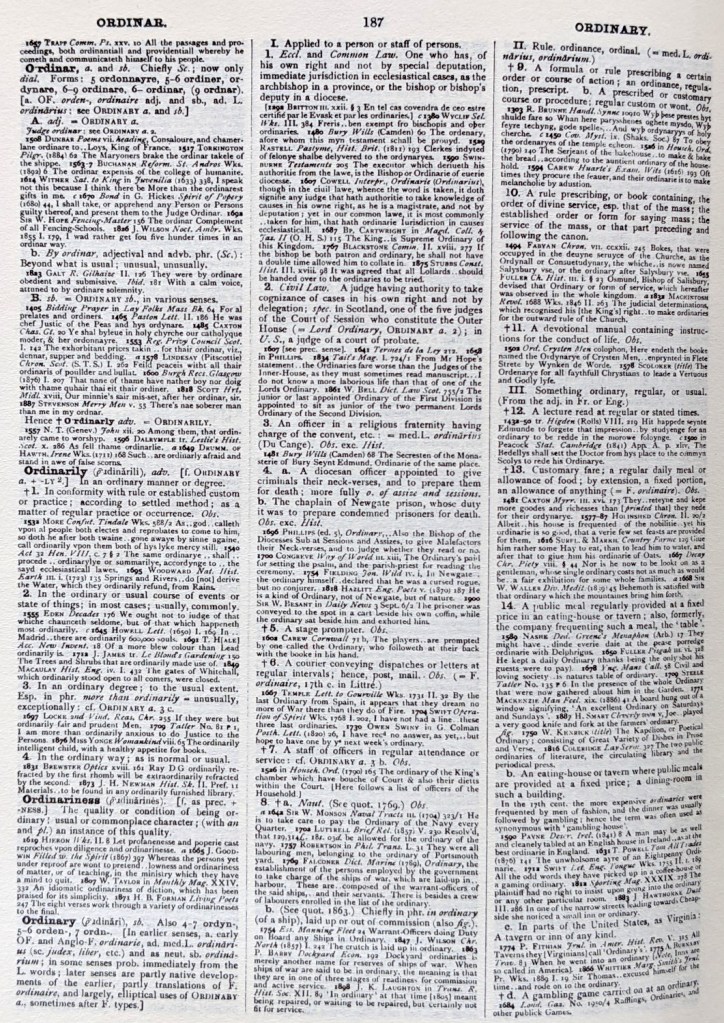
From the Oxford English Dictionary:
A closer look at the many definitions of “Ordinary” including a Virginia specific item!

A look on Google Maps Street View just now reveals a *similar* looking structure at a similar looking intersection in the village called “Rectortown” now — Rt. 710 is also called “Rectortown Rd.” but it’s on the corner of Routes 710 and 624? Perhaps the State has adjusted the Route numbers in the past 30 years. Sure looks a lot like it with the double chimneys!

Oddly, just last night, I watched a 60 Minutes story about a family that “accidently” purchased the house where their ancestors lived. I recommend checking it out…

Did Any Rectors Own Slaves?

John Jacob Rector 1773 Estate (partial) from Fauquier Co. Courthouse records

It was with great interest that I pulled Book 1 of over 100 bound records in the Fauquier (“It’s pronounced “Faw-KEER”) County, VA courthouse after placing all my electronic devices (including my fone) into a locker once I passed through the metal detectors in the lobby of the courthouse. Unfortunately I arrived with only 30 minutes until closing time on a Friday in May of 2022 so I had to dive in quickly. I had started with the Index book for all wills and estates recorded before 1925, and when I reached the “R” section, there were Rectors galore. I chose the earliest record I could find, which was for John Jacob Rector, the first son of the immigrant Johan Jacob Richter, who died in 1773. Bingo!

Continue reading “Did Any Rectors Own Slaves?”