Top Work

Graft stubsNo, I didn’t get hair plugs…

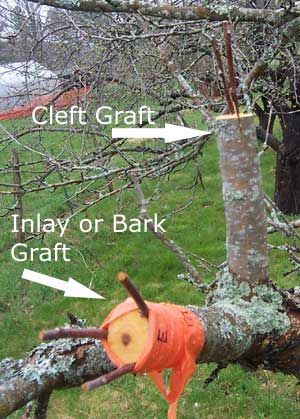
Just before it started to rain on Monday afternoon, I climbed into my unproductive MacIntosh apple tree (which regularly blooms with scab — a fungus infection — in late July, whereupon all the young apples fall off the tree) and started grafting scions of other apple varieties onto some of the limbs. Last year an orchardist suggested top-working the tree instead of cutting it down because it rarely produced edible fruit.

We inherited this particular tree along with five other semi-dwarf varieties (two Rome Beauty, Northern Spy, Macoun, and Cortland) with the property, all about twenty years old at the time we moved in. Besides the MacIntosh the other trees, despite our utter inexperience and ineptitude tending an orchard, regularly bear prolific quantities of beautiful fruit. We managed to press fifty gallons of cider last year, and we still left bushels of apples on the trees because we just couldn’t fit all of them onto the truck to take them to our local press (our sheep, cows, and the wild deer were very happy to help with the rest).
Continue reading “Top Work”
Stick A Fork In It, It’s Done

View
Last Sunday the the weather (overcast and cool, but not raining) and my schedule (no planned activity) allowed me to dig my main garden in preparation for spring planting. This is a critical beginning to the gardening year because digging fluffs the soil, gets those microbes converting the generous amounts of organic matter (read: cow poop) into available nitrogen, and removes the weeds that got established in the long autumn demise into winter last year.
Continue reading “Stick A Fork In It, It’s Done”

Mâche Pit

mache

Now that it’s after Candlemas, things in our hoophouse are really taking off.

Candlemas is celebrated as “Groundhog Day” in the U.S, and is thought to be the ancient marking of the point between Winter solstice and the Vernal equinox; according to Wikipedia, in France, “Candlemas (French: La Chandeleur) is celebrated with crêpes, which must be eaten only after eight p.m. If the cook can flip a crêpe while holding a coin in the other hand, the family is assured of prosperity throughout the coming year…” Did you and Valerie flip your crêpes, Bro?

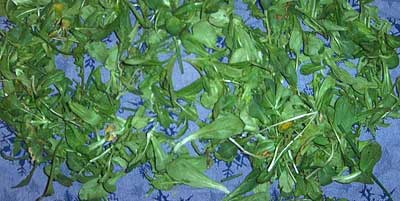
One of the hardiest of the greens we grow through the winter are these cute little tufts of buttery soft green called “mâche” or “corn salad” which are starting to bolt in the early spring heat. (Our unheated hoophouse will often get 40 to 50 °F above the outside temp, which now can be a blazing 40 or 50 °F at mid-day — you do the math…)
Continue reading “Mâche Pit”

Day Tripper

Livermore Valley

livermore_valley

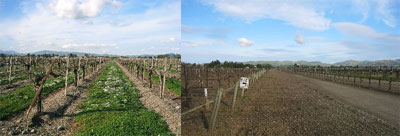
Last weekend I wanted to go on a day trip and Carol hrrrumphed that, so she agreed I could put a trip to the Livermore Valley wine country on the calendar for this Sunday.

Saturday, after Farmers Market, I”m making my breakfast and it’s a beautiful day and sposta be shitty on Sunday with lots of rain and I sez to Carol, “Lets go to Livermore today,” and she hrrrumphed that she’s doing laundry and stuff. So I say I”ll do laundry tomorrow, we gotta get out of the house once in a while.

So, we”re off. It’s a shot down the I-580 speedway, which goes south and then east. I”d never been to Livermore. It’s always featured on the TV weather report and usually for being totally hot in the summer, the antithesis of San Francisco, I”m thinking parched and dry. Actually, it has the knobby green hills like Sonoma County, but these are smaller.
Continue reading “Day Tripper”

The Big Oyster

The Big Oyster…and I don’t mean Marc…

The Big Oyster is the title of Mark Kurlansky’s new book which shucks the long and complex story of this bi-valve from between the crusted shells of history. Kurlansky’s last book was Cod, which did the same thing for that significant fish, primarily as a lens for the history of North America, and it appears he focuses primarily on oysters in New York City in this new book, at least according to the New York Times review.

Oysters also happened to be a subject of the Boston Globe’s food section this week, which follows a Wellfleet oyster shucker to the national oyster shucking championships in Miami.
Continue reading “The Big Oyster”

Better Butter Biscuits

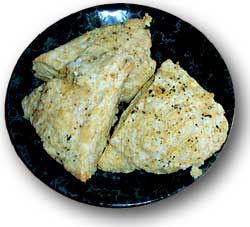
Cheese BiscuitsOK, so I DID start this process by making butter out of fresh cream, but that’s not absolutely necessary.

[In case you are interested how that would work, I’ll quickly describe what I did. Pick up a bunch of fresh cream, innoculate with a little mesophilic culture (the “Flora Danica” mix seems to deliver the best flavor, in my tests, but you could even use a little organic cultured sour cream or creme fraiche because they use the same cultures), and let sit at around 80 °F for 24 hours, afterwhich it should have thickened slightly, but not solidified, and start to smell like sour cream. Shake/whip the cream *at room temperature* until it peaks, then breaks (this could take 15 to 30 minutes) forming bits of butter that start clumping together. Pour off and save separate liquid — this is your buttermilk. Wash the butter grains in cool water until the water stays clear, then knead into a large mass, set aside in the refrigerator.]
Continue reading “Better Butter Biscuits”

Pork5Ways

Gloucestershire Olde Spot hogA friend’s recent birthday dinner featured Boudin of Chicken Livers, a lovely poached sausage based on chicken livers with toasted walnuts and shallots (from American Charcuterie by Victoria Wise which is a terrific book for anyone interested in making their own sausages, terrines, patés, and other meat products). In addition to these complementary ingredients, a hunk of “pork fatback” was called for — half a pound to be exact. To obtain this fat back, I extracted a hunk of badly butchered pork loin from the freezer, a refugee from a “Pork Processing Workshop” that I organized last October.

(“Badly butchered” because there were newbies wielding the knives breaking down two whole pigs that were meant to end up mostly as sausage, so the loin was not as plump and round as it could have been. Otherwise the meat was very good — young, tender, and sweet, having been raised organically and fed largely on beets for the last month of its life.)
Continue reading “Pork5Ways”

sour hot salty bitter stinky goodness

kimchee jarI love daikon radish, maybe too much because I tend to grow too much of them at once. It doesn’t help that I’m the only person in my family who eats them.

I think back to fond childhood memories of hot summer afternoons when my father would enjoy a turnip and a beer on the weekends while watching a Red Sox game on TV. He would peel the fist sized white and purple root in one long spiral strand, then eat it slice by slice, pulling the knife across the edge of the sphere, using his thumb as a stop. If I were quiet, he might hand me a slice every so often. This crunchy cool vegetable would taste the way green looked, then provide a little scorching pop in the sinuses and out the ears. The aftertaste was best: a lingering mustardy burn that would persist in the back of the throat, reinforced by the occasional burp.
Continue reading “sour hot salty bitter stinky goodness”